Environmental Consultancy Services
The purpose of Environmental Consultancy Services at SRI to provide expert, science-based guidance to stakeholders to identify, assess, manage, and reduce the environmental impacts while ensuring compliance with legal regulations.
Environmental Impact Assessment (EIA)
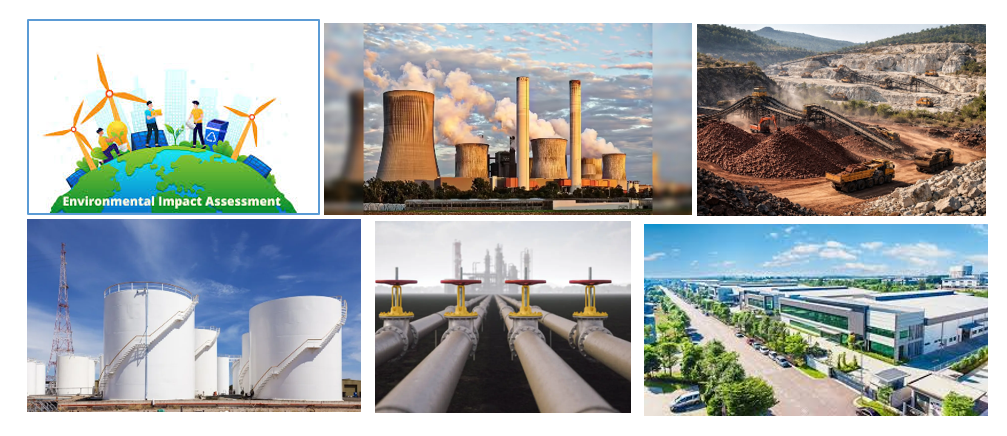
The SRI is an Environmental Impact Assessment (EIA) Consultant Organization accredited by the National Accreditation Board for Education and Training (NABET), a constituent Board of QCI, in the following EIA sectors:
- Industrial estates/ parks/ complexes/ areas, Export processing zones (EPZ), Special Economic Zones (SEZ), Biotech parks, Leather complexes (A-category)
- Oil & Gas transportation pipeline (crude & refinery/ petrochemical products), passing through national parks/ sanctuaries/ coral reefs/ecologically sensitive areas including LNG terminals (A-category)
- Isolated storage & handling of hazardous chemicals (As per threshold planning quantity indicated in column 3 of schedule 2 & 3 of MSIHC Rules 1989 amended 2000) (B-category)
- Mining of minerals – Opencast Mining (B-category)
- Thermal power plants (B-category)
Lifecycle Emission Management and Climate Mitigation Consultancy
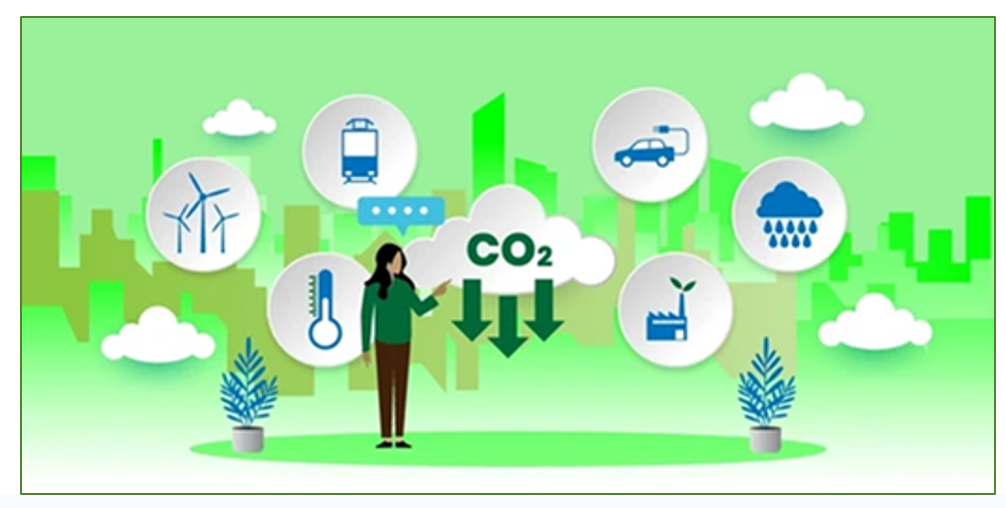
Specialization exists for emission inventories, climate change mitigation, and carbon footprint assessment, to help organizations measure, report, and reduce their greenhouse gas (GHGs) emissions in alignment with international standards like the GHG Protocol, ISO 14064, and ICAO-CORSIA Standard.
- GHG Emission Inventories (Scope 1, 2 and 3): Boundary Setting; Data Collection & Calculation; and Mapping.
- Carbon Footprint Assessment (Product & Organization): Cradle-to-Grave; Cradle-to-Gate; and Gate-to-Gate.
- Development of roadmap and actionable plans to reduce emissions and guiding companies towards carbon neutrality and implementing carbon offsetting strategies.
- Climate vulnerability mapping and Risk Assessment.
- Climate Resilience Assessment and adaptation.
Quantitative Risk Assessment (QRA) & HAZOP
Specialization exists for Quantitative Risk Assessment (QRA) and Hazard & Operability (HAZOP) studies of Hazardous Chemicals and Petroleum Products Storage Installations and Transportation pipelines
- Hazard Identification and Risk Analysis (HIRA)
- Maximum Credible Accident Analysis (MCCA)
- Fault Tree Analysis (FTA)
- Event Tree Analysis (ETA)
- Failure Mode and Effects Analysis (FMEA)
- Consequence Analysis
- Vapour Cloud Explosion (UVCE) and Flash Fire to assess (i) toxic area of Vapour Cloud (ii) flammable area of vapour cloud
- Physical explosion, BLEVE and Fireball, Pool Fire and jet fire
- The effect of fire includes duration of exposure and quantitative estimation of thermal radiation intensity levels of 4 kW/m2, 4.7 kW/m2, 10 kW/m2, 25 kW/m2 and 37.5 kW/m2.
- The effects of overpressure is assessed quantitatively for 0.01 bar, 0.07 bar, 0.1 bar, 0.2 bar, 0.3 bar and 1.7 bar.
- HAZOP Study: To identify hazards in process plant and operability problems, which compromises the plant’s ability to achieve the design of intent. The HAZOP is required for every line to delineate “Intentions (design)”; “Deviations”, “Causes”, “Consequences” and “Action”.
- Onsite Emergency Plan/ Disaster Management Plan/ Emergency Response & Disaster Management Plan

Source Apportionment (SA) studies
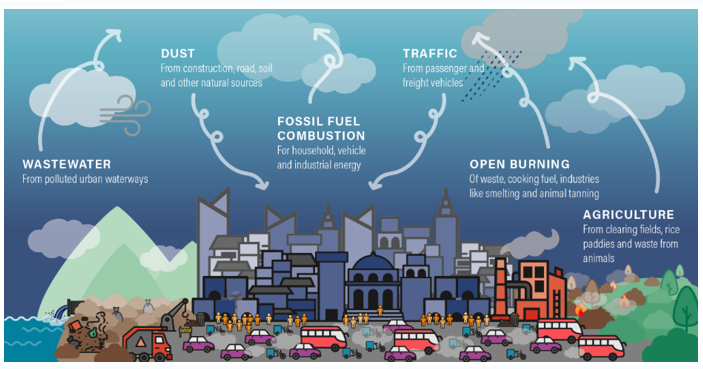
Comprehensive science-based support is available for development of targeted mitigation strategies by distinguishing between the contributions of different emission sectors to ambient pollution such as traffic, industry, construction activities, and other sources. These studies are essential for development of urban air quality management plans. Key Components of these studies are
- Top-down approach including Air Quality Monitoring, Chemical Fingerprinting, Receptor Modeling – Positive Matrix Factorization (PMF), Chemical Mass Balance (CMB), and Principal Component Analysis (PCA).
- Bottom-up approach including Meteorological Modeling, Emission Inventory, Chemical Transport Model
Micro-meteorology and Air Pollutants Dispersion Modeling
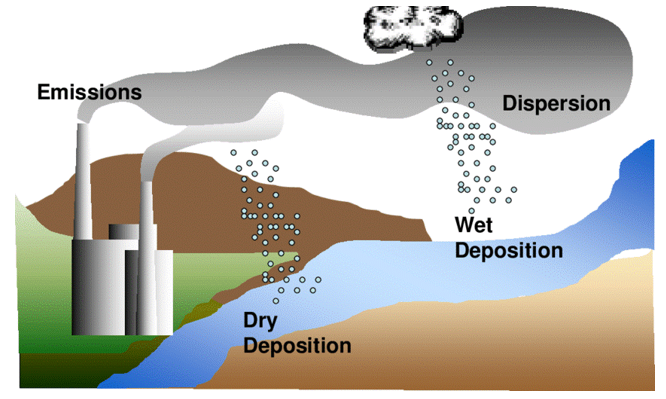
We have expertise in the specialized field for analyzing how pollutants move and transform in the atmosphere using USEPA software for Air Pollution Dispersion Modeling. This discipline is a subset of Atmospheric Sciences, specializing in the application of numerical mathematical simulations to predict air pollutant concentrations. The accuracy of these models is fundamentally dependent on meteorological drivers such as wind speed & direction, atmospheric stability, mixing height, temperature inversions, solar radiations, humidity, etc., which dictate whether pollutants will be diluted and carried away or remain trapped near the source.
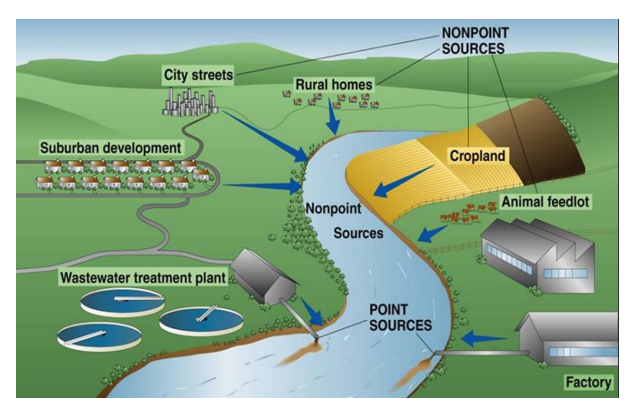
Point and Non-point Sources of Pollution
Adequate resources exist to identify point sources such as pipes, factory discharges, STPs, and Oil rigs, as well as non-point diffuse sources like agriculture runoff and urban stormwater, facilitating the tracing and tracking of pollutants pathways:
- Intensity and load of pollution
- Evaluation of the impacts
- Action plan for mitigation/ management
Inputs for the Development of River Action Plans
Comprehensive science-based inputs are provided for the development of river action plans, pollution monitoring, and watershed management with a focus on
- Water Quality Monitoring & Surveillance
- Watershed Assessment and Management
- Ecological Impact Assessment
- Pollution Abatement and remediation
- Water Balance
- Contaminant Source Tracking/ Apportionment
- Sustainable Management Practices
- Bio-magnification and bio-accumulation of toxic substance in water and food chain
Water, sanitation, and Hygiene (WASH) Services
Scientific-evidence based services to support WASH and Public Heath includes:
- Scientific validation of water treatment, purification, and testing technologies to strengthen Community Based Water Quality Monitoring & Surveillance including reliability and validation of Water Quality Field Test Kits
- Sanitation and Decentralized Waste Management Solutions
- Data-driven Decision Support System
- Development of Climate Risk Indices for Water Supply, Safety, and Security for climate risk-zone mapping
- Assessment of availability, functionality, and adequacy of climate-resilient water supply and sanitation infrastructure